Future Flavors: How Tech Is Shaping Tomorrow’s Cuisine

Future Flavors: How Tech Is Shaping Tomorrow’s Cuisine

Food and Drink
Smart Farming: The Future of Sustainable Food Production The fusion of technology and agriculture is redefining the very fabric of food production. Smart farming is not merely a buzzword; it is an innovative paradigm where IoT, AI, and robotics coalesce to create an efficient, sustainable food ecosystem. By harnessing these cutting-edge technologies, we can expect a revolution in how we cultivate, harvest, and distribute food. Subsection 1.1: IoT and Precision Agriculture Internet of Things (IoT) devices are becoming indispensable in agriculture, enabling farmers to monitor crop health in real-time. Sensors can track soil moisture, nutrient levels, and temperature, allowing for precise interventions. For instance, companies like CropX are using soil sensors that communicate with cloud-based models to provide actionable insights. By automating irrigation systems, farmers can reduce water usage by…

Read More
Next-Gen Reference Materials: Powering Tomorrow’s Innovations

Next-Gen Reference Materials: Powering Tomorrow’s Innovations

Reference Materials
Reimagining Reference Materials in the Age of AI The landscape of reference materials is evolving faster than ever, driven by the rapid advancement of artificial intelligence and machine learning technologies. As traditional reference tools become increasingly digitalized, we witness a transformation in how we access, curate, and utilize information. This section explores how AI and machine learning are redefining reference materials, focusing on personalized learning experiences and interactive tools. Subsection 1.1: AI-Driven Personalized Learning Artificial intelligence is paving the way for personalized learning experiences that tailor reference materials to individual user needs. Platforms like Duolingo and Khan Academy leverage AI algorithms to adapt content based on user performance, ensuring that learning is efficient and engaging. The use of natural language processing (NLP) enhances the ability to assess user queries and…
Read More
Reimagining Heavy Industry: Innovations in Engineering Today

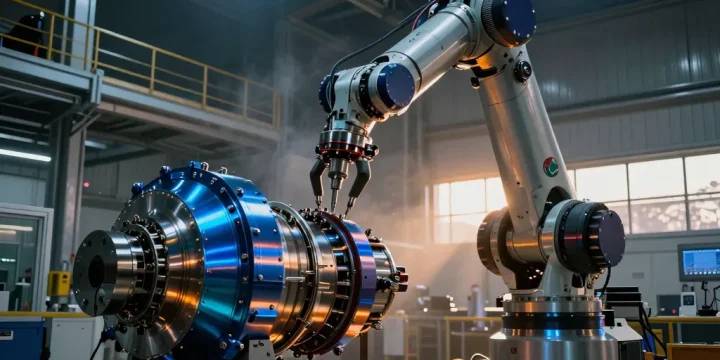
Reimagining Heavy Industry: Innovations in Engineering Today

Heavy Industry and Engineering
Transformative Robotics in Heavy Industry The next decade will witness a monumental shift in heavy industry through the integration of robotics. These advanced machines are not just tools; they are becoming co-workers, designed to enhance productivity and safety in environments once deemed too hazardous for human intervention. Subsection 1.1: Collaborative Robots (Cobots) Collaborative robots, or cobots, are engineered to work alongside humans, augmenting their capabilities rather than replacing them. For instance, automotive manufacturing plants are increasingly deploying cobots to assist in assembly lines. This not only boosts efficiency but also reduces the physical strain on workers. Companies like Universal Robots are pioneering these technologies, showcasing successful deployments where productivity has surged by up to 50%. Subsection 1.2: Autonomous Mobile Robots (AMRs) AMRs are redefining logistics in heavy industry. These intelligent…
Read More
Next-Gen Reference Materials: Powering Tomorrow’s Innovations

Next-Gen Reference Materials: Powering Tomorrow’s Innovations

Reference Materials
Reimagining Reference Materials in the Age of AI The landscape of reference materials is evolving faster than ever, driven by the rapid advancement of artificial intelligence and machine learning technologies. As traditional reference tools become increasingly digitalized, we witness a transformation in how we access, curate, and utilize information. This section explores how AI and machine learning are redefining reference materials, focusing on personalized learning experiences and interactive tools. Subsection 1.1: AI-Driven Personalized Learning Artificial intelligence is paving the way for personalized learning experiences that tailor reference materials to individual user needs. Platforms like Duolingo and Khan Academy leverage AI algorithms to adapt content based on user performance, ensuring that learning is efficient and engaging. The use of natural language processing (NLP) enhances the ability to assess user queries and…
Read More
Future-Ready Vehicles: Driving Innovation in Mobility

Future-Ready Vehicles: Driving Innovation in Mobility

Vehicles
The Rise of Autonomous Vehicles The landscape of transportation is undergoing a radical transformation with the rise of autonomous vehicles. These self-driving machines are not just a futuristic dream; they are being integrated into our daily lives faster than many anticipated. With advancements in AI, machine learning, and sensor technology, we are on the brink of a new era in mobility. Subsection 1.1: How Autonomous Vehicles Work Autonomous vehicles leverage a combination of technologies to navigate and operate without human intervention. They employ sensors such as LIDAR, radar, and cameras to create a real-time map of the environment. Advanced algorithms analyze this data to make split-second decisions that ensure safety and efficiency. Subsection 1.2: Current Real-World Implementations Companies like Waymo, Tesla, and Cruise are already testing their self-driving cars on…
Read More
Next-Gen Reference Materials: Powering Tomorrow’s Innovations

Next-Gen Reference Materials: Powering Tomorrow’s Innovations

Reference Materials
Reimagining Reference Materials in the Age of AI The landscape of reference materials is evolving faster than ever, driven by the rapid advancement of artificial intelligence and machine learning technologies. As traditional reference tools become increasingly digitalized, we witness a transformation in how we access, curate, and utilize information. This section explores how AI and machine learning are redefining reference materials, focusing on personalized learning experiences and interactive tools. Subsection 1.1: AI-Driven Personalized Learning Artificial intelligence is paving the way for personalized learning experiences that tailor reference materials to individual user needs. Platforms like Duolingo and Khan Academy leverage AI algorithms to adapt content based on user performance, ensuring that learning is efficient and engaging. The use of natural language processing (NLP) enhances the ability to assess user queries and…
Read More